
Lexical Density of the verse, for usage of Artificial Intelligence (AI) & Computational linguistics
| Number of words: | |
|---|---|
| Lexical Words:* | |
| Non-lexical words:** | |
| Lexical Density: |
* Words of Noun, adjective, verb & adverb
** Words of Pro-noun, post-position, conjunction & interjection
ھِن بيت جا مُکيہ اِسم
ڀٽائي پيڊيا جو واٽس ائپ چئنل فالو ڪريو

- سُر کاھوڙي جَي ڏوٿِي، ڏُٿ، ڏُونگر جو بيت
کَڻَنِ نَہ کَرڪاڻَ، پَنڌِ پَراھين ھَلِئا،
ڏوٿِيڙا ڪَنھِن ڏُٿَ کي، جُنبِئا ڏُونھُن جابانَ،
کاھوڙِيَنِ اُھڃاڻَ، اَنگِ نَہ سَڄِي اَڳِڙِي.
رسالن ۾ موجودگي: 86 سيڪڙو
سمجهاڻي
هُو کاهوڙي پاڻ سان (جبل جهاڳڻ واسطي) ڇنل ۽ پراڻا کيترا بہ کڻي نٿا هلن، توڻي جو هو وڏي پنڌ تي پيا وڃن، بلڪه هو پاڻ وڏي جوش جذبي سان گهڻي ڏُٿ واري جُوءِ (جاباڻ، ڪڇ جي جهُريي جبل) لاءِ سھي سنڀري هليا آهن. انهن کاهوڙين جي پري کان اها سڃاڻپ آهي، تہ سندن جسم رڳو ٿڳڙين سان ڍڪيل آهي.
[ شارح: ڊاڪٽر عبدالغفار سومرو ]
گنج ۾، سرود کاھوڙي، بيت نمبر : 2363
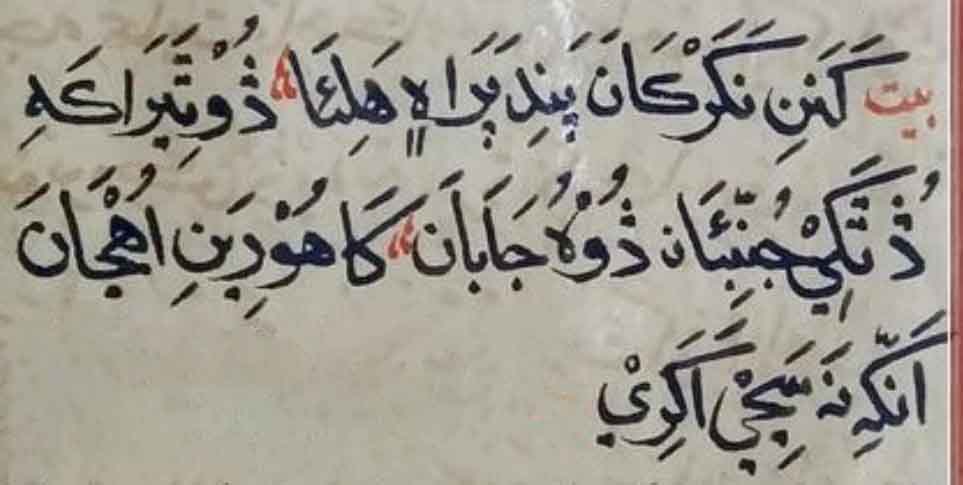
کَنَنِ نَکَرِڪَانَ پَندِ پَرَاہ﮼ هَلِئَا﮶
ڎُوْٿِيَرَا ڪَهِ ڎُٿَـکٖيْ جُنبِّئَا ڎُوْہُ جَابَانَ﮶
کَاهُوْرِيَنِ اُهْڃَانَ اَنکِّہ نَہ سَڃِيْ اَکَرِيْ﮶
ھِي بيت ٻين سھيڙيندڙن وٽ ڏِسو
TRANSLITERATION
सिन्धी देवनागिरी
खणनि न खर्काण। पंधि पराहें हलिआ।
डो॒थियड़ा कंहिं डु॒थ खे। जुंबिआ डूं॒हुं जाबान।
खाहोड़ियनि उह्ञाण। अंगि न सजी॒ अगि॒ड़ी।
ROMAN SINDHI
Khannan na kharkaann'a, pandh paraheen haliya,
Dotheerra kehn Duth'a khe, junbiya Duhoon jabaan'a,
Khaahorriyan uhnjaann'a, ang na saJhhee aggrree.
TRANSLATIONS
They do not use any mount. They move about and cover long distances on foot. Acting on some cue they have set out for a remote desert to obtain particular wild fruit. They have no cloth intact on their body, and that is the mark of their recognition (Their clothes are reduced to shreds due to the ruggedness of the tract).
مراز خاک کویت پیراہن است برتن
آں ہم ز آب دیدہ صد چاک تا بدامن
(Jamali)
I wear only a shirt in your street (i.e. Realm) That too due to my tears is reduced to shreds
Khhahoris need no transport, on foot they walk to far of lands,
They move in search of some special wild grain, there are their signs, torn clothes on their bodies they have.
Using no mount, they get going on a trek,
Their minds set on finding Duth in wilderness,
Not even a rag on their bodies is what marks them out.
المجتهدون والمشتاقون لا يأخذون معهم المطايا ولاكن يسيرون ماشين إلى منازل بعيدة المشتاقون انطلقوا إلى الصحراء والفلوات ليفتشوا حبوب الغلال الخاصة.
وسيماهم فى أسمالهم يلبسون على أجسادهم.
پاس نہیں ہیں گھوڑے، دور سفر کا دھیان،
ثمر کی خاطر چھان رہے ہیں، دشت جبل ویران،
ان کی یہ پہچان، کہ تن پر اک گدڑی ہے۔
داستان اندر ٻيو اندراج
- (بيت) اُٿِئو اُٿِئو ڪَنِ، ھَلو ڏورِيُون…
- (بيت) تان وَنءُ ويھِي آءُ، اَڱَڻِ…
- (بيت) تُون ھَڏِ ڪُڄاڙِئا، سَنجهي سَعيو…
- (بيت) جيڪو ڏُٿُ ڪَري، تَہ ڏُونگَرَ…
- (بيت) رائو رِڃُ رَھُون، جِتي نِينھان…
- (بيت) سُڪا سَنڊَ ڪَڇُنِ ۾، کَرڪَڻا…
- (بيت) مُون سي ڏِٺا ماءَ، جَنِي…
- (بيت) مُون سي ڏِٺا ماءِ، جَنِي…
- (بيت) مُون کاھوڙِي لَکِئا، سُمَهنِ ڪِينَ…
- (بيت) مُون کاھوڙِي لَکِئا، ويھِي نَہ…
- (بيت) مُون کاھوڙِي لَکِئا، گهَرين نَہ…
- (بيت) وَيُون پَٻِ پَئِي، کيرُون کاھوڙِيَنِ…
- (بيت) وِئا وِھائُو، ڏوٿِي ڏورا ڏُٿَ…
- (بيت) پارِئا پُڇِي آءُ، خَبَرَ کاھوڙِيَنِ…
- (بيت) پيرين پُراڻا کيٿِڙا، سُڪا مُنھَن…
- (بيت) ڀَڪُلِئا ڀُڻَنِ، دَلَقَ گَڏِئو ڌُوڙِ…
- (بيت) ڀَڪُلِئا ڀُڻَنِ، دَلَقَ گَڏِئو ڌُوڙِ…
- (بيت) ڏوري ڏوري ڏيھَ، ماءَ کاھوڙِي…
- (بيت) ڏوٿِي سا ڏورِينِ، جا جُوءِ…
- (بيت) ڏُونگَرَ ڏُکارو، ڏِٺُمِ ري ڏوٿِيين،…
- (بيت) ڏُٿُ گَهڻا ئِي ڪَنِ، ھِنَ…
- (بيت) ڏُکارو ڏُونگرُ، ڏِٺُمِ ري ڏوٿِيين،…
- (بيت) کاھوڙِي کِجَنِ، پَسِئو پورِھِيَتِ ويسَرا،…
- (بيت) کاھوڙِيَنِ کَڻِي، ساجُهرِ ٻَڌا سَندِرا،…
- (بيت) کَرڪَڻا لاھي، سُکِ نَہ سُتا…
- (بيت) کِڄِئا کاھوڙِي، پَسِي پورِھِيَتِ ويسَرا،…
- (بيت) ڪِ ڪي کاھوڙِي، ڇَپَرَ ۾…
- (بيت) ھُوءِ ڏوٿِي ھُوءِ ڏِينھَن، ھُوءِ…